Dental Filling Treatment for a Cavity

The procedure for a dental filling is commonly used to treat cavities. A cavity happens when bacteria in the mouth end up producing acids that attack the teeth. With time, the acid dissolves away the enamel of the teeth. This can cause a hole referred to as a cavity. Read on to learn more about the dental filling procedure and the various materials that your dentist may use.
Dental filling procedure
People should be aware that a cavity cannot heal by itself. But it can be stopped and sometimes, even reversed if the early signs of decay are treated in good time before a cavity forms. If a person does not seek treatment, the decay will continue to advance. In some cases, decay can result in the loss of the affected tooth or teeth. Decay can also cause a lot of discomfort, infection, as well as other health problems.
Different types of fillings
A dentist will talk to a patient about the different types of material that can be used to fill a cavity. Some of the most common options include white tooth-color fillings, porcelain fillings, and silver-color fillings. Others include glass ionomer fillings and gold fillings. Each of these fillings has its pros and cons. In the case of composite plastics, they are very popular because of their durability, greater strength, and better color varieties. Composites can be used on not only the front teeth but also posterior teeth, like molars.
What to expect
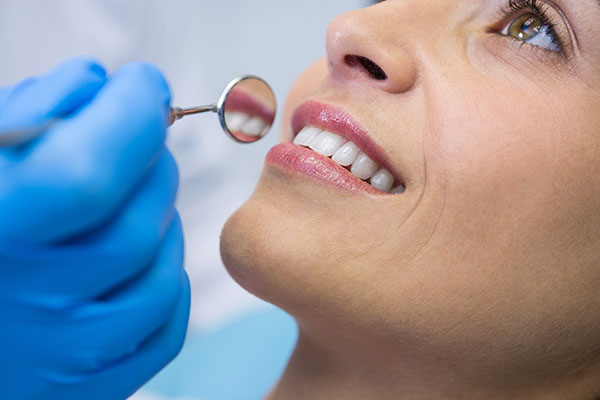
The dentist will start by examining the patient’s mouth and will check the cavity using dental instruments. An X-ray may be taken if needed. Before filling cavities, the dentist will numb the tooth area in order to prevent the patient from experiencing any pain. Once the area is numb, the dentist will drill out the decay in the patient’s tooth and then replace it with a dental filling.
Healing
Most fillings heal in a short time with no problem. After the anesthetic eventually wears off, the patient’s tooth may feel a little sensitive. This often goes away in a day or so, but there are several ways to reduce tooth sensitivity. A person may have to brush and floss more gently around the filling.
An individual can benefit from chewing on the other side of the mouth for a few days. It can help to avoid hot or cold drinks or foods and acidic foods. A patient should inform the dentist if the bite feels off. Adjusting the filling surface may be necessary to improve the bite. It is also vital for the dentist to be made aware of any long-lasting pain or sensitivity.
Takeaway
The dental filling procedure offers an effective way to treat cavities. It is a painless procedure that does not take a lot of time. It is important to take the time to learn about the pros and cons of the various fillings and how to care for a filling. To find out more about the dental filling procedure and different filling materials, talk to your dentist.
Are you considering a dental filling in the Scottsdale area? Get more information at https://sonorandesertdentistry.com.
Check out what others are saying about our services on Yelp: Read our Yelp reviews.
Recent Posts
Many patients prefer Invisalign® to traditional braces because it is more comfortable and almost invisible. This system straightens teeth more gently as well. Understanding the process can help you maintain consistency when wearing your aligners. Here are the details on how Invisalign slowly shifts your teeth.This teeth-straightening system remodels the jawbone as it aligns the…
If your smile needs a total reset due to years of damage, full-mouth reconstruction may be the solution. Many people feel as though they are stuck in a cycle of fixing one tooth just as another one breaks. This patchwork approach to dentistry can be exhausting and expensive. By viewing the mouth as a whole system…
Are you considering Invisalign®? Read on to learn more. Metal braces used to be the gold standard for bite issues like overbites and underbites. Now, more than four million Americans are currently undergoing some form of orthodontic treatment, many of whom are turning to Invisalign as a discreet and effective approach to correcting dental misalignment…
Invisalign® and braces are both proven to align a smile successfully. The former is relatively new in comparison to the latter appliance. However, the power of either option is undeniable. Take a closer look at their advantages and disadvantages before scheduling a consultation to see which is most effective for you.Invisalign has many advantages. The…