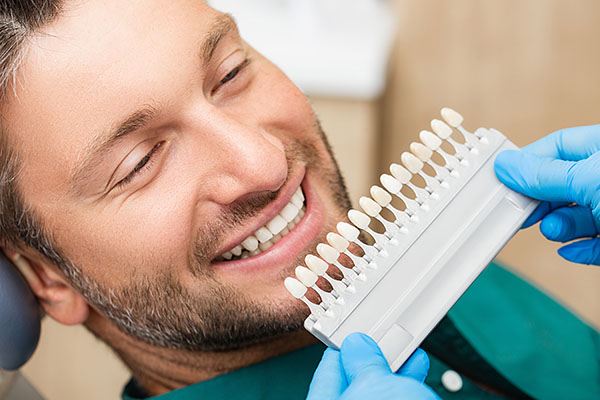
 Many dental patients turn to veneers to help fix their smiles. This popular treatment option is able to correct many minor issues with the teeth and is an easy procedure that can quickly enhance a smile’s appearance.
Common questions about veneers
The following are questions that patients frequently ask about veneers:
1. Are veneers permanent?
Veneers are not considered permanent, but are long-lasting. They usually need to be replaced at some point, but typically last for up to 20 years or more with proper care. This treatment, however, is not reversible. When preparing the teeth for placement, a thin layer of enamel must be removed first. Because enamel is unable to grow back, teeth always need to have veneers after being filed.
2. How do veneers work?
Veneers are thin shells, typically made from porcelain, that are customized to fit directly onto the teeth and are used to fix a variety of issues with the appearance of a patient’s smile. The most common reasons for choosing veneers are to fix issues such as discolored and stained teeth, misalignments, and teeth that have become chipped, worn, cracked, or broken. This noninvasive procedure typically involves a few visits to complete. During the first visit, a consultation with a dentist for an evaluation is needed to see if the treatment is a good option.
The second visit involves preparation, which includes reshaping the surface of the teeth and removing a small layer of enamel. The dentist then takes an impression of the teeth and has the impression sent to a lab for fabrication of the restorations. This typically takes a few weeks to complete, and temporary veneers can be attached in the meantime to protect the teeth.
The final visit involves placement of the veneers. The dentist places the shells on the teeth and carefully examines them to make sure the color and fit is correct, then attaches them firmly with a special cement that bonds the porcelain to the teeth via a special UV light. Patients may feel slight discomfort and soreness after the procedure, but it is usually resolved within a week.
3. Do veneers need special care?
Veneers need only basic maintenance to ensure longevity. Patients need to practice standard oral hygiene, including brushing, flossing, and using mouth wash. Patients should also be sure to visit the dentist twice a year for routine cleanings and exams. It is important to avoid chewing exceptionally hard or sticky foods, as this could possibly cause the restorations to break, chip, or fall out. Patients who play contact sports may want to consider wearing a mouth guard to prevent trauma to the mouth that could potentially result in damage to the coverings.
Conclusion
Veneers are a successful treatment option to help correct multiple problems with a person's smile. Patients who have issues with the appearance and alignment of their teeth can discuss this solution with a dentist to see if it is right for them.
Request an appointment or call Sonoran Desert Dentistry at 480-439-0117 for an appointment in our Scottsdale office.
Recent Posts
Dental veneers can help improve tooth color, shape, and size with a customized cosmetic treatment plan. They are a great fit for patients who think their smile looks uneven because of deep stains, worn edges, small gaps, chips, or teeth that appear shorter than others. Learning how veneers work can help you determine whether they…
Choosing dental veneers offers a reliable path toward a smile that feels more confident and looks entirely natural. While many people opt for over-the-counter (OTC) whitening or minor bonding, these options often fall short when addressing deep stains or uneven tooth shapes. Visiting a general dentist can help you understand how these thin shells work…
If you are tired of feeling self-conscious about your smile, then dental veneers may be the solution you are looking for. They can help repair chipped, stained, or misaligned teeth. This blog guide will walk you through everything you need to get dental veneers.Dental veneers are thin, custom-made shells that a dentist places over the…