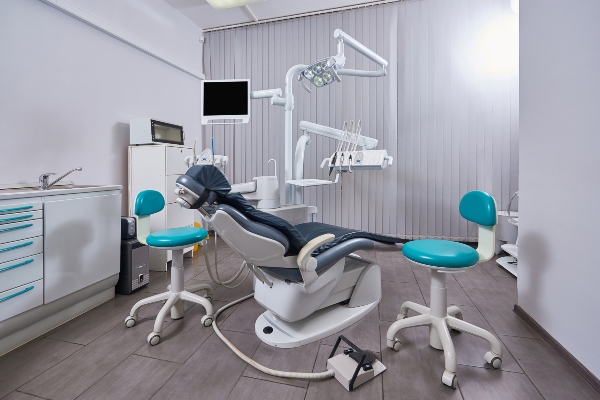
Dental Filling Treatment for a Cavity

The procedure for a dental filling is commonly used to treat cavities. A cavity happens when bacteria in the mouth end up producing acids that attack the teeth. With time, the acid dissolves away the enamel of the teeth. This can cause a hole referred to as a cavity. Read on to learn more about the dental filling procedure and the various materials that your dentist may use.
Dental filling procedure
People should be aware that a cavity cannot heal by itself. But it can be stopped and sometimes, even reversed if the early signs of decay are treated in good time before a cavity forms. If a person does not seek treatment, the decay will continue to advance. In some cases, decay can result in the loss of the affected tooth or teeth. Decay can also cause a lot of discomfort, infection, as well as other health problems.
Different types of fillings
A dentist will talk to a patient about the different types of material that can be used to fill a cavity. Some of the most common options include white tooth-color fillings, porcelain fillings, and silver-color fillings. Others include glass ionomer fillings and gold fillings. Each of these fillings has its pros and cons. In the case of composite plastics, they are very popular because of their durability, greater strength, and better color varieties. Composites can be used on not only the front teeth but also posterior teeth, like molars.
What to expect
The dentist will start by examining the patient’s mouth and will check the cavity using dental instruments. An X-ray may be taken if needed. Before filling cavities, the dentist will numb the tooth area in order to prevent the patient from experiencing any pain. Once the area is numb, the dentist will drill out the decay in the patient’s tooth and then replace it with a dental filling.
Healing
Most fillings heal in a short time with no problem. After the anesthetic eventually wears off, the patient’s tooth may feel a little sensitive. This often goes away in a day or so, but there are several ways to reduce tooth sensitivity. A person may have to brush and floss more gently around the filling.
An individual can benefit from chewing on the other side of the mouth for a few days. It can help to avoid hot or cold drinks or foods and acidic foods. A patient should inform the dentist if the bite feels off. Adjusting the filling surface may be necessary to improve the bite. It is also vital for the dentist to be made aware of any long-lasting pain or sensitivity.
Takeaway
The dental filling procedure offers an effective way to treat cavities. It is a painless procedure that does not take a lot of time. It is important to take the time to learn about the pros and cons of the various fillings and how to care for a filling. To find out more about the dental filling procedure and different filling materials, talk to your dentist.
Are you considering a dental filling in the Scottsdale area? Get more information at https://sonorandesertdentistry.com.
Check out what others are saying about our services on Yelp: Read our Yelp reviews.
Recent Posts
Invisalign® is a popular brand of clear aligners for people who want to straighten their teeth without braces. Treatment is flexible, discreet, and effective, provided the patient is a good candidate and wears the aligners as directed. Here are some important things to know to help you get the most out of Invisalign treatment.Invisalign is…
Teeth-straightening with Invisalign® aims to improve your bite and smile. Straight teeth are more stable and easier to maintain. You can also reap many benefits in your career and social life with straighter teeth. Understanding the process can prepare you well for your first day of treatment. Here are some Invisalign FAQs to ask your…
Invisalign® clear aligners offer a way to straighten teeth without braces. Not everyone is comfortable wearing obvious brackets and wires, so clear aligners present a more flexible and discreet alternative. Explore this and the other benefits of Invisalign clear aligners and determine if you are a candidate.Treatment with clear aligners involves wearing a series of…
Bioclear offers a conservative way to repair chips, close small gaps, reshape teeth, and improve uneven edges. Unlike traditional bonding, this technique uses clear forms and warmed composite material to create smooth, natural-looking results. A cosmetic dentist may recommend it for patients who want conservative treatment without removing large amounts of healthy enamel.Traditional dental bonding…