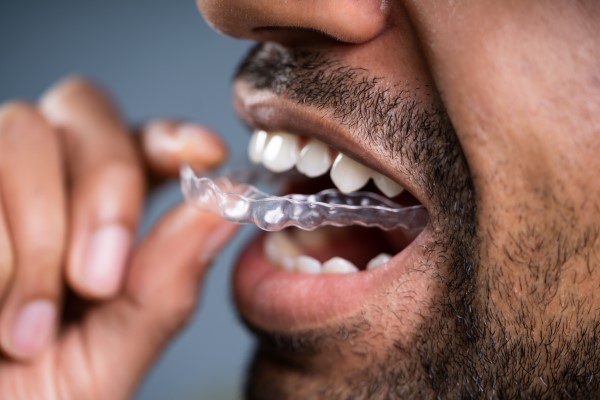
General dentists typically recommend a dental night guard for patients who deal with teeth grinding, especially at night. Also known as bruxism, the American Dental Association notes that it affects between 10 to 15 percent of Americans, which makes it a common issue. Although night guard treatment is usually the preferred option for bruxism patients, it is also used to treat other conditions as well. This article covers what you need to know about night guard treatment, including when the dentist will recommend it and how it works.
Night guard treatment for bruxism
Many people who grind their teeth do so while asleep and are usually unaware of the issue. Since it is a subconscious act, there is no way for a patient to correct the issue. The dentist is often the first to notice signs of teeth grinding during a dental checkup. However, patients can look for signs themselves, such as teeth sensitivity, flat or chipped teeth, recurrent headaches, sore jaw muscles and neck or facial pain.
A general dentist will recommend a night guard for managing bruxism. Also called a bite splint, occlusal guard and occlusal splint, a night guard is customized for each patient by using an impression of their oral cavity. The device does not stop patients from grinding or clenching their teeth. They are worn inside the mouth as a layer between the teeth to prevent grinding and restrict the jaw’s movement.
The night guard protects and cushions the teeth from excessive deterioration and helps recreate the natural gap between the upper and lower teeth. Without prompt intervention, bruxism can increase the risk of chipped or fractured teeth and cause issues with the temporomandibular joint.
Nightguards for sleep apnea
Nightguards are also an effective option for relieving sleep apnea. The condition causes regular snoring, dry or sore throat and daytime sleepiness. Sleep apnea disrupts airflow, causing breathing stoppage several times during the night, the side effects of which are potentially harmful.
Aside from CPAP devices, which are usually recommended for treating sleep apnea, a night guard is an effective option for managing the condition. The night guard realigns the jaw and bite, prevents the teeth from hitting against each other and improves airflow to allow for normal breathing.
Nightguards for TMJ disorder
Temporomandibular joint (TMJ) disorder refers to issues affecting the jaw joint and associated structures. Bruxism and jaw injuries are common causes of TMJ disorders. The condition can make normal jaw usage painful and difficult.
A night guard is an affordable, convenient and non-invasive option for treating TMJ disorder. A properly fitted night guard moves the teeth and jaw to proper alignment and relieves symptoms like jaw tension, headaches and joint pain.
Final note
The conditions listed above require prompt intervention. There is no reason to live at the risk of tooth damage or deal with the symptoms of TMJ disorder. If you think you might need night guard treatment, you should contact the dental office to book an appointment. The dentist will perform an examination and recommend the best treatment options.
Request an appointment here: https://sonorandesertdentistry.com or call Sonoran Desert Dentistry at (480) 439-0117 for an appointment in our Scottsdale office.
Check out what others are saying about our dental services on Yelp: Night Guard in Scottsdale, AZ.
Recent Posts
Wearing a night guard each night can help protect your teeth if you grind them while sleeping. These devices lessen the stress that bruxism places on teeth, resulting in less damage. Most people with bruxism often go undiagnosed because the condition mostly happens during sleep. A visit to the dental office can help to identify…
Bruxism is the medical term that refers to grinding the teeth during sleep, something which night guards may help prevent. Grinding is not just annoying but can also cause damage to the teeth, as well as a variety of other health problems. A dentist can perform an exam to determine the extent of the damage…
Mouthguards are a common oral device used by athletes during sporting activities, yet many people do not know that a dental night guard is also available to protect teeth while sleeping. People dealing with teeth grinding (called bruxism) or suffering from sleep apnea can get customized night guards from their dentist to to relieve the…
A night guard is an appliance for the mouth that helps protect the teeth as well as gums. It is commonly used to protect the teeth from the damaging effects of teeth grinding. Teeth grinding or bruxism can be treated by wearing the appliance while you sleep. Read on to learn more about the benefits…